
Water Extraction & Removal in Bradenton, FL
Standing water inside your home or business can damage flooring, carpets, baseboards, and other building materials. Water from a plumbing leak, appliance overflow, or indoor flooding can spread beyond the area where it first appears, making prompt water removal an important step in addressing the damage.
Bradenton Restoration Specialist provides water damage restoration services for properties in Bradenton, Florida. If water has collected inside your property, contact us to discuss the affected areas and determine the appropriate next steps for water extraction and removal.
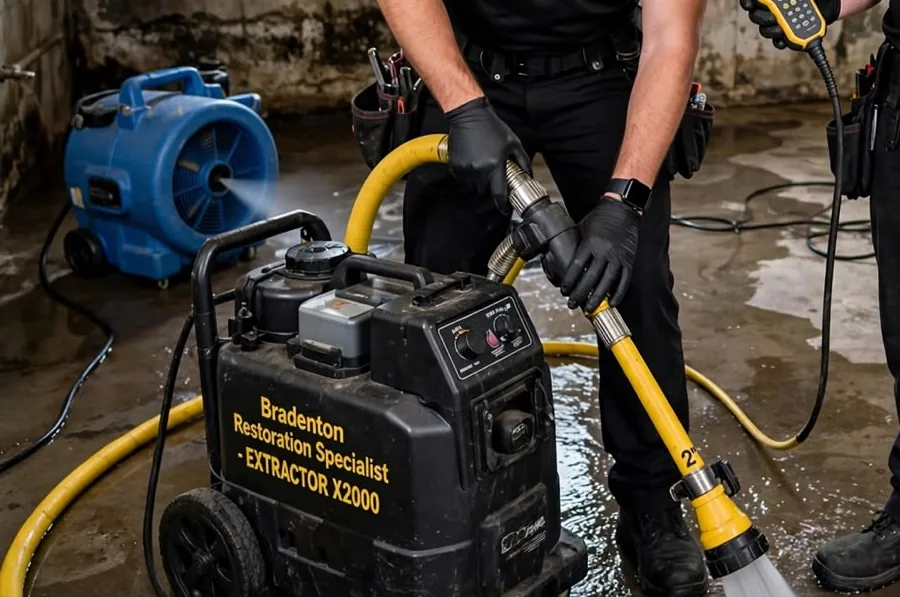
When You Need Professional Water Extraction
Water can accumulate on floors and move into materials that are not immediately visible. Removing standing water helps address the immediate problem, but the appropriate approach depends on the water source, the affected surfaces, and how far the water has spread.
Standing Water from Leaks, Overflows, and Indoor Flooding
Standing water can result from several types of plumbing and household incidents. A damaged pipe, leaking water heater, overflowing washing machine, or dishwasher malfunction may release enough water to affect multiple rooms. Indoor flooding can also leave water across floors and around furniture, walls, and stored belongings.
Common situations that may require water extraction include:
- Water from burst or leaking pipes
- Water heater leaks affecting nearby floors
- Washing machine and dishwasher overflows
- Toilet or sink overflows
- Indoor flooding that leaves standing water
- Water entering a property through a roof leak
The source of the water matters when determining the appropriate cleanup approach. Water that may contain sewage or other contaminants should not be handled like clean water from a supply line. Avoid direct contact with potentially contaminated water and keep people away from unsafe areas.
For sudden or extensive water intrusion, visit our Emergency Water Damage Restoration page to learn more about the initial response to water damage.
Water Removal from Carpets, Flooring, and Other Surfaces
Water can affect more than the visible surface of a floor. Carpet and carpet padding may retain moisture, while water can seep into gaps between floorboards, beneath flooring materials, and around baseboards. Drywall and other porous building materials may also absorb water when exposure continues.
The extent of the damage depends on the type of flooring, the amount of water, and how long the materials remain wet. A surface that looks dry may still have moisture beneath it, so affected areas may need further assessment after standing water is removed.
Water extraction can help clear accumulated water from accessible areas and prepare the property for the next stage of water damage restoration.
Our Water Extraction and Removal Process
Effective water removal starts with understanding where the water is located and which parts of the property have been affected. The process may vary depending on the water source, the size of the affected area, and the materials involved.
Assessing Standing Water and Affected Areas
The first step is to establish the visible extent of the water intrusion and identify the areas that require attention. This includes considering the affected rooms, flooring materials, nearby walls, and the likely source of the water.
Water can move beneath carpets, behind baseboards, and into concealed spaces. Additional moisture assessment may be appropriate when visible signs do not show the full extent of the problem.
Safety also matters during this stage. If water is near electrical equipment or wiring, the area should not be entered until it is confirmed safe. If the source is an active plumbing leak, it should be addressed safely to help prevent further water from entering the property.
Removing Standing Water from Your Property
Water extraction focuses on removing accumulated water from affected areas. The appropriate method depends on the volume of water, accessibility, and the surfaces involved. Once accessible standing water has been removed, the affected areas can be checked to determine whether additional water or moisture remains.
Removing visible water is an important step, but it does not automatically mean that carpets, subfloors, walls, or other materials are dry. Further assessment may be necessary to determine the next steps and reduce the risk of continued moisture-related damage.
For water damage caused by a burst pipe, see our Burst Pipe Water Damage page. If the source is a leaking water heater, visit our Water Heater Leak Cleanup page.
What Happens After Water Extraction?
Water extraction addresses accumulated water, while the condition of the affected materials determines what should happen next. Depending on the circumstances, the property may require additional moisture checks and a structured drying process.
Checking for Moisture Beneath Floors and Behind Walls
Water can remain trapped in carpet padding, beneath flooring, behind baseboards, and inside wall cavities after the visible water has been removed. These concealed areas may take longer to dry than exposed surfaces.
An assessment of affected materials can help identify areas that may require additional attention. The need for further work depends on the type of material, the extent of the water intrusion, and how long moisture has been present.
Addressing residual moisture is important because prolonged damp conditions can contribute to material deterioration and increase the risk of mold growth.
Preparing the Property for Structural Drying
After water extraction, affected materials may require structural drying and dehumidification. These steps help address residual moisture that cannot be removed simply by extracting standing water.
The drying requirements depend on the building materials, the amount of water involved, and the conditions inside the property. Some areas may need closer monitoring than others, particularly where moisture has entered concealed spaces.
Learn more about this next stage on our Structural Drying & Dehumidification service page.
Water Extraction Services in Bradenton, FL
Water Removal for Bradenton Homes and Businesses
Water intrusion can affect homes, offices, retail spaces, and other buildings in Bradenton, Florida. In a residence, standing water may affect living areas, bedrooms, kitchens, bathrooms, or utility rooms. In a commercial property, water may disrupt workspaces, storage areas, customer-facing rooms, and interior flooring.
The appropriate water removal approach depends on the affected property and the source of the water. Explaining where the water is located, what caused it, and whether the flow has stopped can help establish what assistance may be needed.
Bradenton Restoration Specialist serves the Bradenton area with water damage restoration services. Contact us to discuss the situation at your property.
Contact Bradenton Restoration Specialist
If standing water has affected your property, addressing it promptly can help limit further exposure of building materials to moisture. Do not assume the problem is resolved just because the visible water has disappeared; moisture may remain beneath flooring or inside walls.
Contact Bradenton Restoration Specialist to discuss water extraction and removal for your property in Bradenton, FL.
- Phone Number:
- Call Now +1 (941) 541-0203
- Email:
- [email protected]
- Address:
- 1806 29th St W, Bradenton, FL 34205
- Hours:
- Open 24/7 for emergency calls
When contacting us, describe the likely source of the water, the rooms or surfaces affected, whether water is still entering the property, and any safety concerns. This information can help clarify the appropriate next steps.