
Structural Drying & Dehumidification in Bradenton, FL
Removing standing water is only one part of addressing water damage. Moisture can remain inside drywall, beneath flooring, within carpet padding, and behind baseboards even after visible water has been removed. If these materials remain damp, the damage may continue beyond the areas you can see.
Bradenton Restoration Specialist provides water damage restoration services for properties in Bradenton, Florida. Structural drying and dehumidification help address residual moisture in affected building materials and the surrounding air. The appropriate approach depends on the extent of the water intrusion, the materials involved, and the conditions inside the property.
When Your Property Needs Structural Drying
Water can travel into porous materials and concealed spaces, making the drying process more complex than simply wiping down wet surfaces. Structural drying focuses on affected building materials, while dehumidification helps manage excess moisture in the indoor air.
Hidden Moisture in Walls, Floors, and Building Materials
Water from plumbing leaks, appliance overflows, or indoor flooding can seep beneath flooring and into materials such as drywall, wood framing, insulation, and carpet padding. Baseboards and wall cavities may also retain moisture after the original water source has been addressed.
A floor or wall may look dry on the surface while moisture remains underneath. The extent of this hidden moisture depends on the amount of water, how long the materials were exposed, and their ability to absorb and release moisture.
A moisture assessment can help identify areas that may need further attention. Understanding which materials are affected helps determine whether additional drying measures are appropriate.
Excess Indoor Humidity After Water Damage
Wet building materials can release moisture into the surrounding air as they dry. When indoor humidity remains elevated, affected materials may take longer to dry, depending on ventilation, temperature, and the amount of moisture present.
Dehumidification helps remove excess moisture from the air and supports the drying process. It may be useful after a plumbing leak, water heater leak, appliance overflow, or other incident that leaves building materials damp.
The goal is to address moisture in both the affected materials and the surrounding environment, rather than relying on surface appearance alone.
Our Structural Drying and Dehumidification Process
The appropriate drying approach depends on the type of building materials, the extent of the water damage, and the amount of moisture remaining. Assessing the affected areas helps determine what steps may be necessary.
Assessing Moisture in Affected Building Materials
Before determining the next steps, the affected areas need to be evaluated to understand where moisture may remain. This may include examining visible damage to floors, walls, ceilings, baseboards, and other building materials.
Concealed moisture can be difficult to identify through visual inspection alone. Where appropriate, moisture assessment and monitoring can help evaluate affected materials and provide information about drying progress.
The findings help establish which areas need attention and whether additional drying measures are appropriate. The process may differ between a small, localized leak and water damage that has spread through several rooms.
Drying Materials and Managing Indoor Humidity
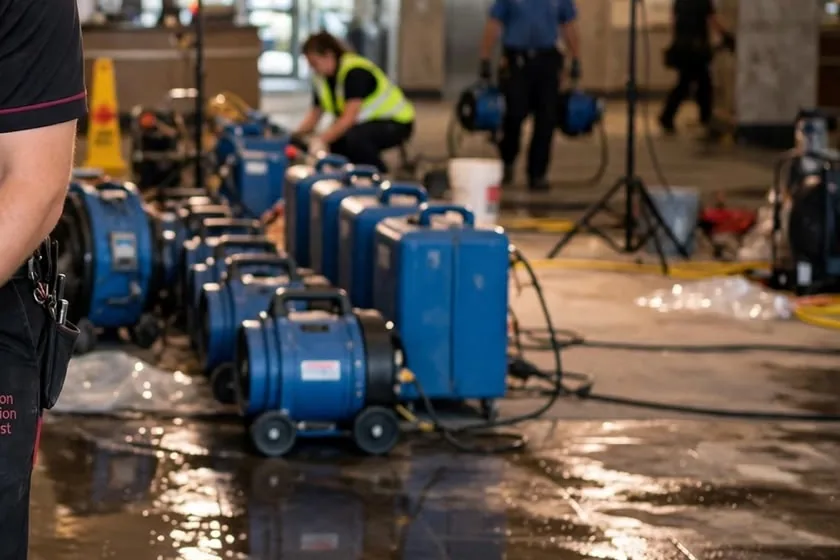
Structural drying addresses residual moisture within affected building materials, while dehumidification helps control moisture in the surrounding air. Depending on the circumstances, the drying process may involve equipment that supports airflow and removes moisture from the indoor environment.
Different materials respond to drying differently. Carpet padding, drywall, wood, and subfloor materials may require different levels of attention depending on how wet they became and how long the moisture remained.
Drying should be evaluated according to the conditions of the property rather than a fixed time estimate. The aim is to address residual moisture appropriately and determine when the affected areas have reached suitable drying conditions.
If standing water is still present, it may need to be removed first. Learn more about this stage on our Water Extraction & Removal service page.
Why Proper Structural Drying Matters
Water damage can continue affecting a property after the original leak or overflow has stopped. Addressing residual moisture helps property owners understand the condition of affected materials and determine what additional work may be needed.
Reducing the Risk of Continued Moisture Damage
Prolonged dampness can contribute to deterioration of building materials, including wood, drywall, flooring, and other moisture-sensitive surfaces. Persistent moisture can also create conditions that support mold growth.
The risk depends on the source of the water, the materials involved, and how long damp conditions persist. Proper assessment and appropriate drying measures can help address these concerns, although drying alone does not remove existing mold contamination or guarantee that mold will not develop.
If visible mold is already present, the situation may require a separate assessment and appropriate remediation. Visit our Mold Remediation page for information about that service, if applicable to your needs.
Monitoring Drying Progress Before the Next Steps
Drying is not complete simply because a surface feels dry to the touch. Moisture may remain inside building materials or in concealed spaces, so progress may need to be evaluated over time.
Where moisture monitoring is part of the service, readings and observations can help determine whether affected materials are continuing to dry. The time required varies according to the materials, the amount of water involved, the indoor environment, and the extent of the damage.
Evaluating the drying progress helps establish whether further drying is necessary and what steps may be appropriate before repairs or replacement of damaged materials begin.
Structural Drying Services in Bradenton, FL
Drying Services for Bradenton Homes and Businesses
Water damage can affect residential and commercial properties throughout Bradenton, Florida. In homes, moisture may affect bedrooms, kitchens, bathrooms, living areas, and utility spaces. In commercial properties, damp flooring, walls, and interior materials can interfere with normal operations.
The drying requirements depend on the affected building materials and how far the water has spread. A localized leak may affect a limited area, while more extensive water intrusion can leave moisture in several rooms or concealed building spaces.
Bradenton Restoration Specialist serves the Bradenton area with water damage restoration services. Contact us to discuss the affected areas and determine what assistance may be appropriate for your property.
Contact Bradenton Restoration Specialist
If your property has experienced water damage, do not assume all moisture has been removed just because the standing water is gone. Damp drywall, flooring, carpet padding, and concealed spaces may require additional assessment.
Contact Bradenton Restoration Specialist to discuss structural drying and dehumidification for your property in Bradenton, FL.
- Phone Number:
- Call Now +1 (941) 541-0203
- Email:
- [email protected]
- Address:
- 1806 29th St W, Bradenton, FL 34205
- Hours:
- Open 24/7 for emergency calls
When contacting us, describe the source of the water, the materials affected, how long the area has been wet if known, and whether standing water has already been removed. These details can help clarify the appropriate next steps.