
Roof Leak Water Damage Cleanup in Bradenton, FL
A roof leak can allow rainwater to enter your property and damage ceilings, walls, flooring, insulation, and other building materials. Even after the rain stops, moisture may remain hidden above the ceiling or inside wall cavities. Bradenton Restoration Specialist helps property owners address water damage caused by roof leaks in Bradenton, FL, with cleanup needs assessed according to the affected areas and condition of the materials.
Whether water is dripping through a ceiling, staining an interior wall, or collecting in an attic, identifying the extent of the damage is an important first step. Roof repairs and interior water damage cleanup may both be necessary, depending on the source of the leak and how far the water has spread.
Common Causes and Signs of Roof Leak Water Damage
Damaged Roofing Materials, Flashing, and Roof Penetrations
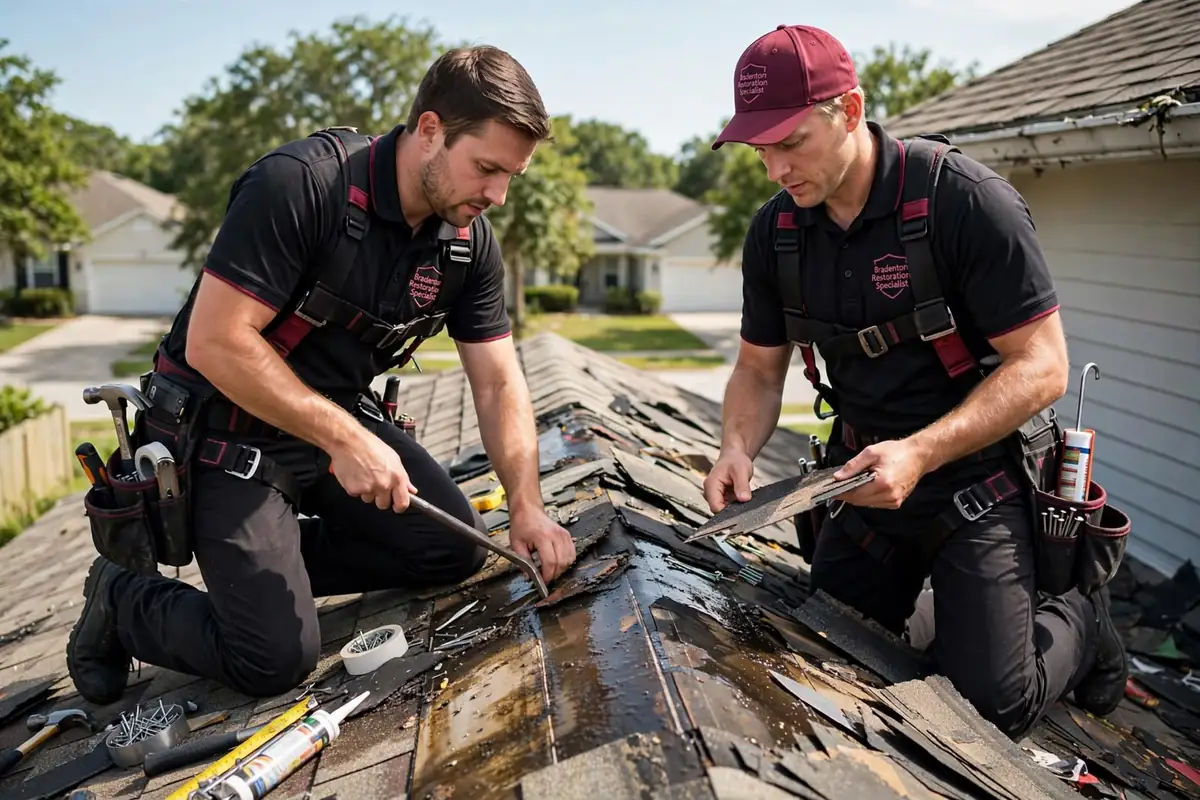
Roof leaks can develop when roofing materials deteriorate or openings allow rainwater to enter. Damaged or missing shingles, worn roof flashing, compromised seals around vents, and problems around skylights can all contribute to water intrusion. Wind-driven rain may also enter through vulnerable areas of a roof during severe weather.
The location of a ceiling stain or drip does not always identify the exact point where water entered. Rainwater may travel along roof decking, wood framing, or other surfaces before becoming visible inside the property. A qualified roofing professional can inspect the roof and determine what repairs may be needed to address the source.
If water is entering your Bradenton property during rainfall, it is important to distinguish between the roofing problem and the resulting interior water damage. Repairing the source helps prevent additional water from entering, while cleanup addresses the materials and spaces already affected.
Ceiling Stains, Wet Walls, and Water-Damaged Interiors
Roof leak water damage can appear in several ways. A small brown stain may develop on a ceiling, paint may begin to bubble or peel, or drywall may become soft and sag under prolonged moisture exposure. In other cases, water may run down walls, collect on flooring, or affect furniture and stored belongings.
Common signs of water damage from a roof leak include:
- Brown or yellow ceiling water stains
- Dripping water during or after rainfall
- Bubbling paint or peeling finishes
- Damp drywall and interior walls
- Sagging ceiling materials
- Wet carpet, carpet padding, or flooring
- Damp attic insulation or visible moisture around roof framing
- Persistent musty odors in areas that remain damp
Not all roof leaks produce immediate or obvious damage. Moisture can remain concealed above ceilings or behind walls, making a closer assessment important when stains return or dampness persists.
What to Do When Your Roof Starts Leaking
Protect People and Address Immediate Safety Concerns
If water begins entering through your roof, prioritize safety before attempting to collect water or inspect the affected area. Keep people away from sagging ceilings, bulging drywall, and areas where water is dripping near electrical fixtures. Wet electrical equipment can present a serious hazard, so do not touch switches, fixtures, or appliances in affected areas when it is unsafe to do so.
Avoid climbing onto a wet roof or entering an unsafe attic to locate the leak. Roof surfaces can become slippery during rainfall, and damaged ceiling materials may fall without warning. Contact a qualified roofing professional to assess the roof and arrange appropriate repairs.
If you suspect an electrical hazard, stay clear of the affected area and contact a qualified professional. If there is an immediate danger, seek appropriate emergency assistance.
Limit Interior Water Damage While Arranging Repairs
Once the affected area is safe to approach, a few practical steps may help limit further damage while you arrange assistance.
- Move unaffected furniture and belongings away from the water when safe.
- Place a container beneath a manageable drip if there is no electrical or structural hazard.
- Keep people away from wet or unstable ceiling materials.
- Photograph visible stains, dripping water, and damaged belongings for your records.
- Arrange for a qualified roofing professional to identify and repair the leak.
- Seek water damage cleanup assistance if water has reached ceilings, walls, flooring, or other building materials.
Avoid cutting into a ceiling, removing insulation, or attempting extensive cleanup without understanding the potential hazards. If water has accumulated above a ceiling, the materials may be weakened, and the affected area may require professional assessment.
Our Roof Leak Water Damage Cleanup Process
Assessing Water Intrusion and Affected Interior Areas
Roof leak water damage cleanup begins with evaluating where water has entered and which areas of the property may be affected. The assessment may include visible ceiling stains, damp drywall, interior walls, flooring, baseboards, and belongings near the leak.
Where accessible and appropriate, the assessment may also consider attic insulation, roof-related framing, and other areas where moisture could remain concealed. The amount of visible damage does not always reflect the full extent of water intrusion, especially when water has traveled behind finished surfaces.
For property owners in Bradenton, FL, understanding the affected areas helps determine which cleanup and restoration steps may be appropriate. A localized ceiling stain may require a different response from a roof leak that has soaked insulation, affected multiple rooms, or allowed water to collect on flooring.
Planning Water Removal and Initial Cleanup
The cleanup approach depends on how much water entered the property, how long the affected materials remained wet, and the types of surfaces involved. If water has collected on the floor, removing accessible standing water may be necessary before the affected area can be evaluated further.
Cleanup may also involve identifying wet materials, assessing damage to belongings, and determining whether additional drying is needed. Removing visible water is only one part of the process because moisture can remain inside porous materials or beneath flooring.
For information about standing water removal, visit our Water Extraction & Removal service page. If a roof leak has caused extensive indoor flooding or requires urgent attention, our Emergency Water Damage Restoration service page provides more information about responding to sudden water damage.
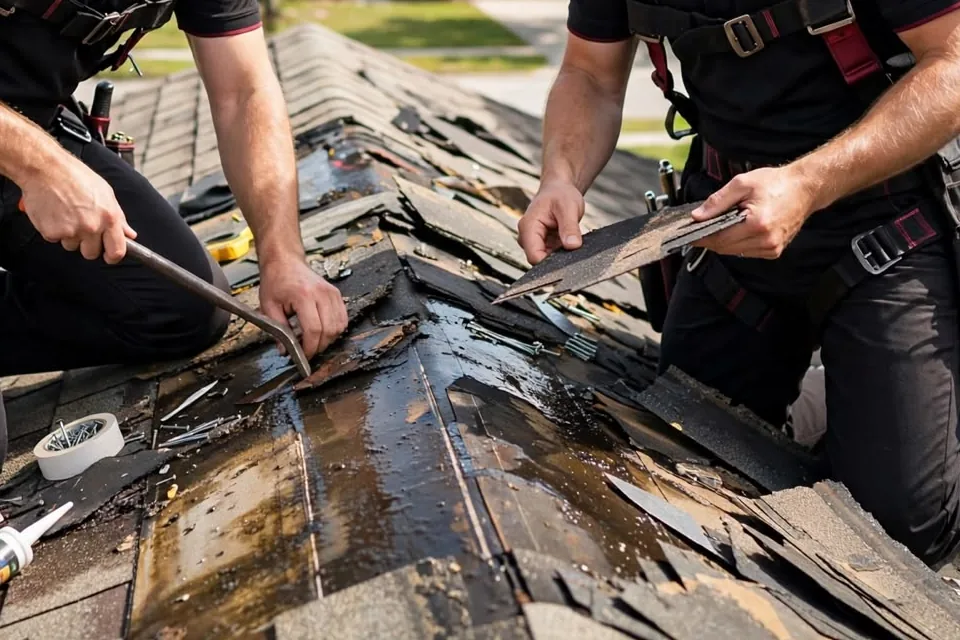
Roof repair is a separate part of addressing the problem. The source of the leak should be handled by a qualified roofing professional, while water damage cleanup focuses on the interior areas affected by the intrusion.
Addressing Hidden Moisture and Damaged Building Materials
Evaluating Wet Ceilings, Drywall, Insulation, and Flooring
Rainwater entering through a roof can affect more than the surface where it first becomes visible. Ceiling drywall may absorb moisture, attic insulation may become damp, and water can travel along wood framing before reaching walls or floors. Depending on the layout of the property, carpet padding, baseboards, cabinets, and personal belongings may also be affected.
Different materials respond differently to moisture. Some surfaces may be suitable for drying, while materials that have deteriorated or sustained extensive damage may require further evaluation and possible replacement. Decisions should be based on the actual condition of the materials rather than assuming every wet surface requires the same treatment.
A careful assessment is particularly useful when ceiling stains continue to spread, paint begins to peel, or dampness remains after the roof leak has been repaired. These signs may indicate that moisture is still present within the affected area.
Managing Residual Moisture and Mold Concerns
Even after the source of a roof leak has been addressed and visible water has been removed, residual moisture may remain in drywall, insulation, wood framing, or other building materials. When dampness persists, it can contribute to material deterioration and create conditions that support mold growth.
Depending on the findings, appropriate next steps may include moisture inspection, structural drying, dehumidification, and monitoring affected materials. The process should be guided by the extent of the water intrusion and the condition of the property. Materials that cannot be adequately dried or that have deteriorated may require additional evaluation.
If moisture remains after a roof leak, addressing it promptly can help reduce the risk of further damage. Our Structural Drying & Dehumidification service page provides more information about managing moisture in water-affected building materials.
Roof Leak Water Damage Help for Bradenton Properties
Cleanup for Bradenton Homes and Commercial Properties
Roof leaks can affect residential and commercial properties in different ways. In a home, rainwater may damage bedroom ceilings, living room walls, attic insulation, flooring, or stored belongings. In a commercial building, a leak may affect offices, work areas, interior finishes, and items stored beneath the damaged section of the roof.
Bradenton Restoration Specialist focuses on water damage cleanup associated with roof leaks in Bradenton, Florida. The appropriate response depends on the location of the intrusion, the extent of the damage, and the types of materials affected.
For broader water intrusion caused by flooding or severe weather, our Flood & Storm Damage Cleanup service page provides additional information about those situations.
Contact Bradenton Restoration Specialist for Roof Leak Cleanup
If rainwater has entered your property through a leaking roof, do not rely on the appearance of the ceiling alone to judge the extent of the damage. Water may have spread into insulation, wall cavities, flooring, or other areas that are not immediately visible.
Contact Bradenton Restoration Specialist to discuss roof leak water damage cleanup in Bradenton, FL. When you reach out, explain where the water is entering, which rooms or materials appear affected, and whether the leak is continuing. This information can help clarify the type of assessment and cleanup that may be needed.
- Phone Number:
- Call Now +1 (941) 541-0203
- Email:
- [email protected]
- Address:
- 1806 29th St W, Bradenton, FL 34205
- Hours:
- Open 24/7 for emergency calls
Contact us to discuss your roof leak water damage concerns and determine the appropriate next steps for cleanup and restoration.